


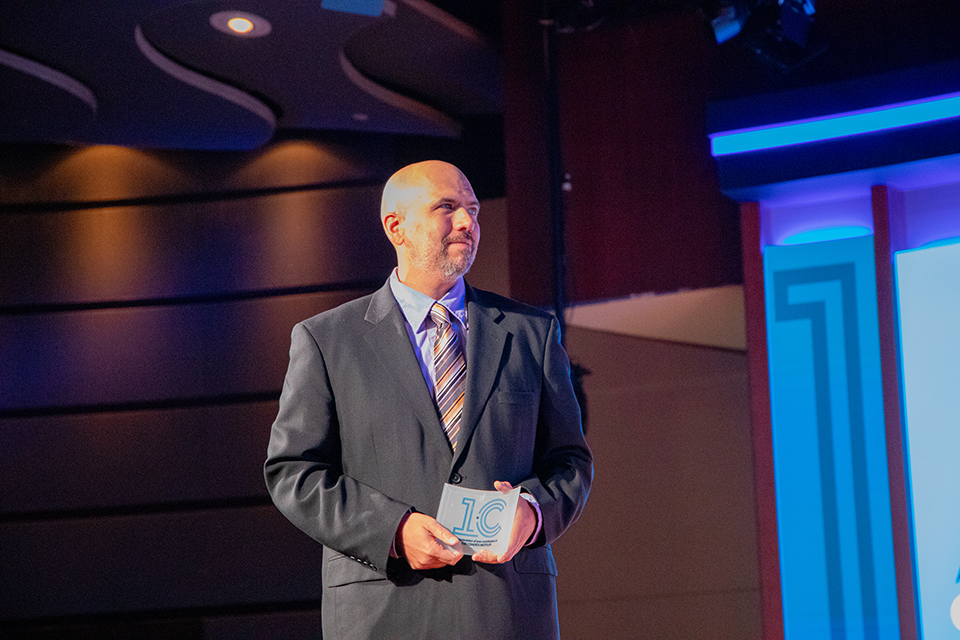
2025 has been a milestone year for the Cisneros Institute!
We kicked off our 10-year anniversary celebrations alongside students, alumni, families, community partners, and friends; we welcomed new cohorts of Caminos Scholars and Cisneros Scholars; we continued existing research projects and expanded our translational research efforts; we held convenings to foster knowledge sharing between students, researchers, and policy leaders in Washington, D.C.; and we delivered customized trainings to nonprofit executives, congressional interns, fellows, and researchers.





To learn more about our work and impact in 2025, see the more comprehensive overview below.
If you are able, please consider making a donation to directly support our Scholars in 2026. And as always, if you see an opportunity for partnership, feel free to reach out to gwcisneros gwu [dot] edu (gwcisneros[at]gwu[dot]edu). We are always looking to collaborate with like-minded, mission-driven organizations.

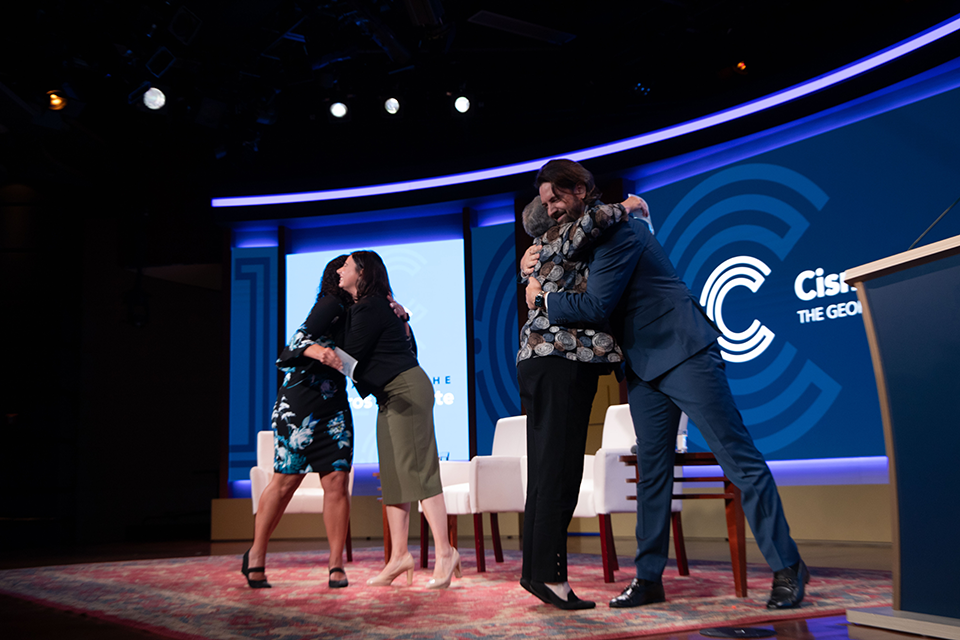
In May, we celebrated the graduation of our Class of 2025 — including 9 Cisneros Scholars and 2 Graduate Fellows — alongside our founders, Gil and Jacki Cisneros, and GW President Ellen Granberg.
In June, high schoolers from 13 different states joined us for the 8th edition of our Caminos al Futuro pre-college program, learning all about the college admissions process, the evolving demographics of Latino populations across the United States, and translating their passions into community impact.
Throughout the summer, our Comunicadores for the Future fellows, sponsored by Vanguard Communications, participated in communications internships at nonprofits across DC (Girl Scouts Nation’s Capital, Bazelon Center for Mental Health Law, Head Start Association, and League of Women Voters) and met with leaders from Congress, the Center for American Progress, the Aspen Institute, and the MacArthur Justice Center, to name a few.
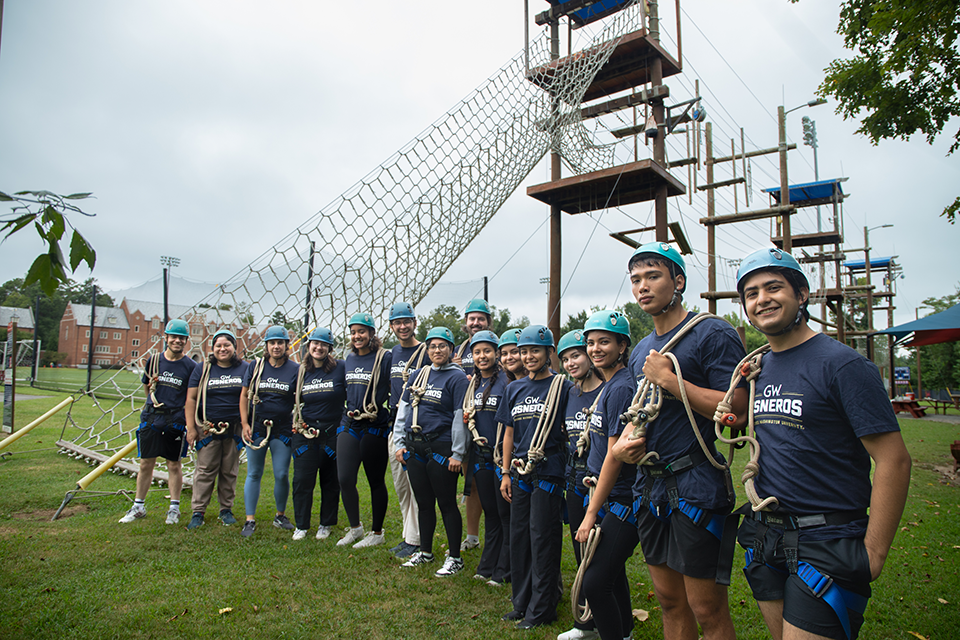
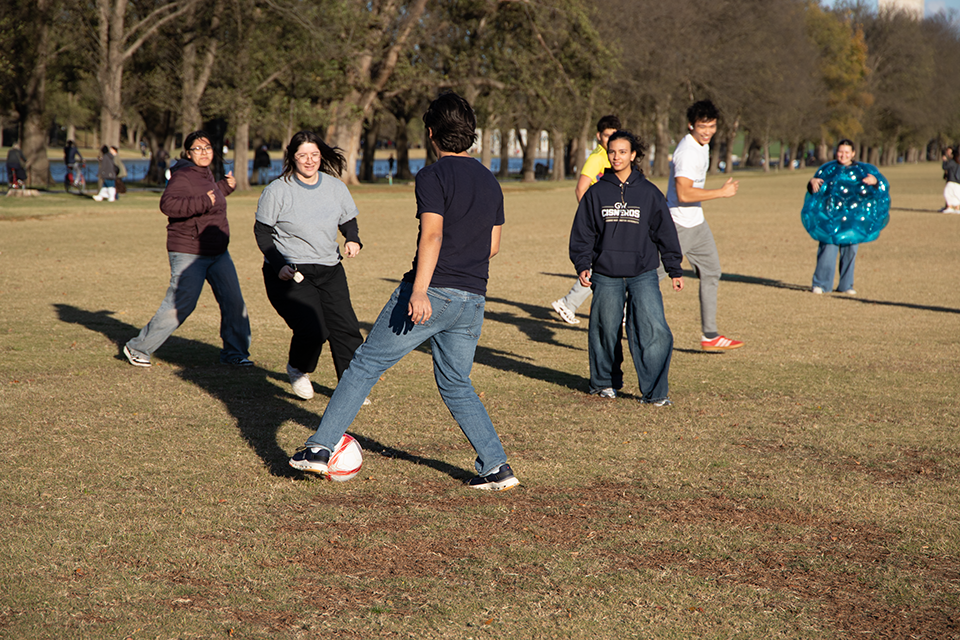
At the end of August, we welcomed our Class of 2029 cohort of Cisneros Scholar with a team building retreat in Richmond, VA, where we participated in a ropes course and guided tour of VMFA's Frida Kahlo exhibition, led by curator Dr. Sarah G. Powers.

This summer, the National Association for Latino Community Asset Builders’ LEAD Fellows completed our Foundations of Executive Leadership program for nonprofit executives, learning how to apply leadership theory and academic research to better serve their organizations and communities. To learn more about our ongoing partnership with NALCAB, see our article from National Nonprofit Day.
In the fall, we hosted a panel of professionals, where Cisneros Scholars have the opportunity to speak with leaders in their fields of interest. Our Scholars spoke with engineers, attorneys, policy experts, medical practitioners, business strategists, project managers and associates at organizations such as the UN International Organization for Migration, UBS, Feeding America, Walsh Construction, and Children’s National Hospital, receiving valuable insights and advice for the future.
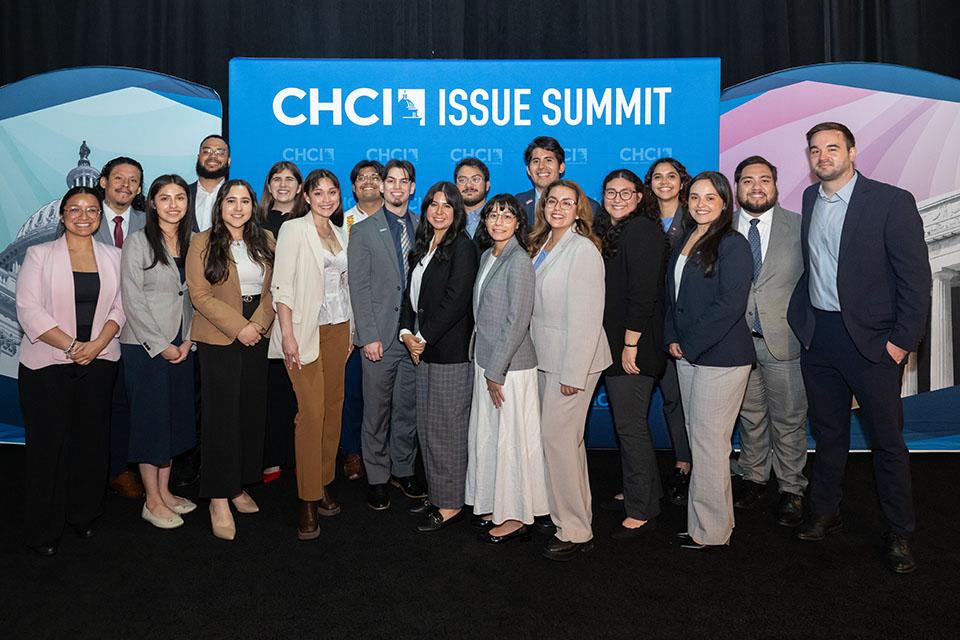
Throughout the year, we continued our work with the Congressional Hispanic Caucus Institute’s congressional interns and fellows, expanding their research, data analysis, and policy writing capabilities in preparation for careers in government and public service.

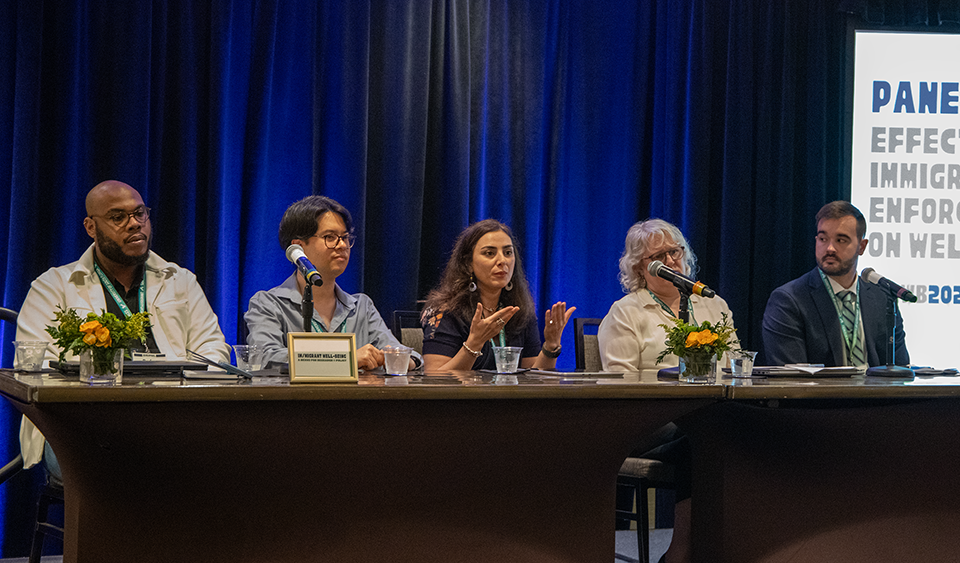
In February, we held our second biennial conference, “Im/migrant Well-Being: A Nexus for Research and Policy," in St. Petersburg, Florida, in collaboration with the University of South Florida’s Im/migrant Well-Being Research Center. On the first day of the conference, top researchers from 16 universities and think tanks across the country presented their research related to immigrant well-being. On day two, attendees participated in a workshop led by the Cisneros Institute, learning how to translate their research into actionable policy insights.
This summer, we completed the fourth year of data collection on phase two of Caminos al Bienestar/Pathways to Health, a longitudinal project funded by the National Institute of Child Health and Human Development (NICHD). This interdisciplinary project uses cutting-edge research methods to advance knowledge of how neighborhoods, schools, policy contexts, and families shape the health and development of U.S. Latino/a adolescents. The team of research assistants and project coordinators for Caminos al Bienestar consists of trained Cisneros Scholars. This year alone, the team successfully coordinated the completion of over 400 surveys and interviews to assess both the physical and social well-being of Latino/a youth and their mothers in the United States. A proposal for phase three of this longitudinal study was recently submitted.
In the fall, we launched the inaugural edition of our academic journal the Cisneros Policy Review (CPR). The CPR is a new research and policy journal focused on issues impacting Latinos across the country. The first volume features articles published by authors from the Congressional Hispanic Caucus Institute’s Public Policy and Post Graduate Fellowship programs. It is our hope that the research contained in this volume can help policymakers and the general public understand these issues to make better, more informed decisions.

At the end of the spring semester, we hosted the Immigration and Migration Symposium at GW’s Textile Museum alongside the Center for Immigration and Migration Studies (CIMS). Students from GW’s micro-minor in immigration & migration studies presented their capstone projects, answering questions from faculty members and fellow scholars. Among the presenters were Cisneros Graduate Fellow Annabelle Manzo, who spoke about the weaponization of water at the US Southern Border; Cisneros Scholar Javier Orellana, who spoke about voting rights; and Cisneros Scholar Delilah Cruz, who spoke about the impact of policy changes on unaccompanied minors.
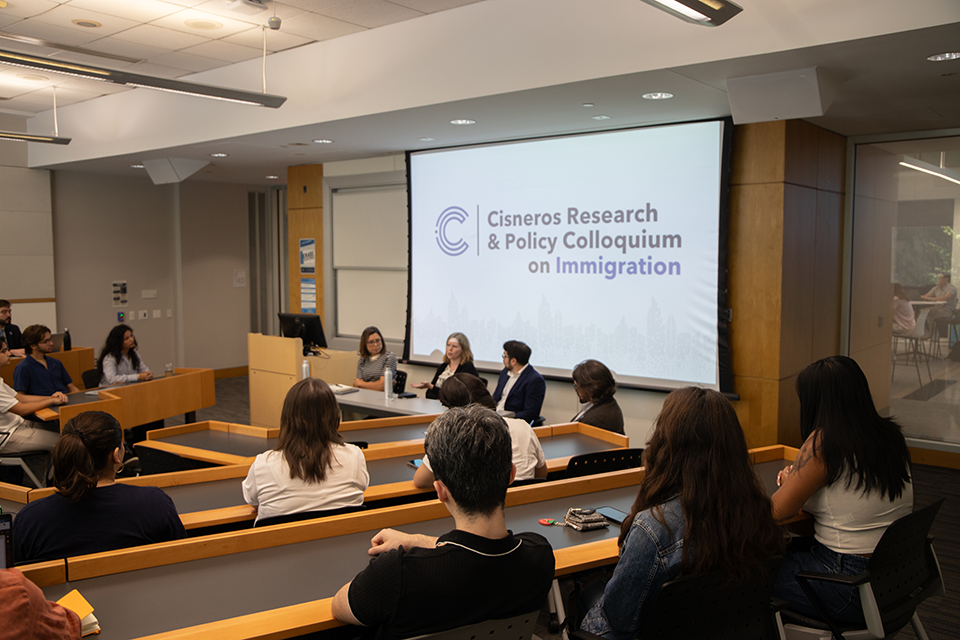
In September, we held the first edition of the Cisneros Research and Policy Colloquia, an invite-only series of gatherings with experts to discuss pressing contemporary issues at the nexus of research and policy. The first event, focused on immigration, featured speakers from the Vera Institute of Justice and the Democracy Power Project. In the audience, we were joined by students, professors, researchers, and policy leaders from across the DMV. This coming spring, we will be hosting our second Colloquium focusing on education.
The Metropolitan Washington Workshop on Immigration & Race (MWWI&R) network — led by the Cisneros Institute, the Center for Immigration and Migration Studies at GW, and the Institute for the Study of International Migration at Georgetown — held 5 sessions this year on GW’s Foggy Bottom Campus. Topics included the exploration of immigrant identity through art, current attitudes toward immigrants in Mexico, the effects of shifting policies on the US-Mexico border, the big business of immigration detention, and the evolving migrant surveillance infrastructure and its impact on both citizens and non-citizens.
Thank you to all of our partners who made this year and the past decade of the Cisneros Institute possible. We hope you have a restorative end to your 2025 and we look forward to expanding our impact together in 2026!
